
A payment company that calls your business high-risk isn’t calling you dishonest. It’s making a bet about the future: how likely are your buyers to ask for their money back, and who pays if you can’t? That bet shapes which account you can get, what you pay and how closely your sales are watched.
A high-risk merchant account is built around that bet. It lets a business in a riskier category take cards through a bank and processor that know exactly what it sells. In return, expect a deeper review, tighter rules and, in many cases, a share of your sales held back for a time.
This guide explains what the label means, who usually gets it and how this account differs from a standard one. You’ll also see which fees and contract terms to check, and what to fix before you apply.
True Line Pay works with businesses in this group, so the last sections list the questions to ask any provider, us included. Every file is different, and no honest provider can promise approval.
What a High-Risk Merchant Account Actually Is
A high-risk merchant account is a card processing account for a business that banks expect to see more chargebacks, fraud or losses than average. The bank and processor approve it knowing that risk, then manage it with a deeper review, closer monitoring, often higher pricing and, in many cases, a reserve.
On the surface it works like any credit card processing setup. A buyer pays, the card issuer approves, and the money reaches your bank account after fees. The difference lies in who agreed to carry your risk, and on what terms.
Why a Bank Worries About a Sale That Already Cleared
When a buyer wins a chargeback, the money has to come from somewhere. If you can’t cover it, the acquiring bank must pay the card issuer, as the OCC’s merchant processing handbook explains. The acquiring bank is the one that signs up merchants and settles their sales.
That exposure lasts long after the sale. Under the Visa Rules, many dispute types have a 120-day filing window. If goods or services never arrived, the clock can run from the date the buyer expected them, up to 540 days after the sale.
So a high-risk label isn’t really about today’s sale. It’s about what could come back over the next few months, and whether you’d still be around to pay for it.
Who Does What Behind the Scenes
A few names come up again and again in this world. The payments glossary covers more, but these four matter most.
- Acquiring bank. Receives card payments for the business and deposits the funds.
- Issuing bank. Issued the buyer’s card and decides whether to approve each payment.
- Payment processor. Routes transactions for approval and settles funds to the business.
- Payment gateway. Sends card details securely from your checkout to the processor.
Who Decides You’re High-Risk
No single body hands out this label. Banks set their own appetite, and the OCC handbook notes that most acquiring banks keep lists of merchants they won’t sign, or will sign only under certain conditions. That’s why one bank can say no to a business that another bank accepts.
Card networks play a part too. Visa has a class called High-Integrity Risk Merchants, set by merchant category code, which is the four-digit label for your type of business. Before a bank submits sales for those merchants, the Visa Rules generally require it to register them with Visa and meet added standards.
Mastercard’s security rules include a registration program for sellers such as remote gambling, drug and tobacco merchants. Regulators don’t ban these businesses as a group. In a 2013 letter, the FDIC said banks that manage the risks well are “neither prohibited nor discouraged” from serving customers that operate within the law.
Six Signals That Move a Business Into This Group
Reviewers rarely judge on one fact alone. They look at your industry, chargeback history, billing model, ticket size and volume, then weigh them together. Here’s how those signals tend to play out.
| Signal | Why it raises concern | Common example |
|---|---|---|
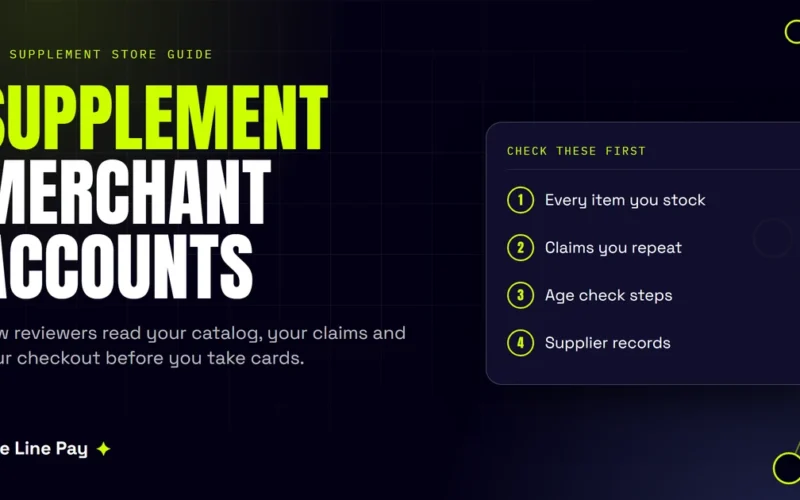
| Product or industry | Some goods draw more disputes or tighter rules | Nutra, supplements, smoke shops, firearms |
| Chargeback history | Past disputes can point to future ones | A prior account with a high chargeback ratio |
| Billing model | Repeat or early billing leaves more room for dispute | Subscriptions, tours paid for months ahead |
| Ticket size | One large dispute costs more to cover | Furniture, moving services, extended warranties |
| Sales channel | No card is present to check in person | Online stores and phone orders |
| Track record | A new business has little history to judge | A startup, or a sudden jump in volume |
The OCC handbook backs up two of these directly. It says mail and phone order merchants, while often reputable, have shown a much higher rate of chargebacks as a group. It also says the risk is greater for future delivery, because disputes don’t start until the delivery date.
True Line Pay lists 26+ high-risk industries on its industries page, from MLM and travel to telemedicine and debt consultation. A category is only a starting point, though. A bank still looks at your own business, not just the group it sits in.
Do You Need One?
You should look at this kind of account if a few of these are true. One alone may not be enough, and the answer can differ by bank.
- You sell something banks often restrict, such as supplements, vape goods or firearms.
- You bill on a schedule or auto-renew your plans.
- You take payment well before you deliver.
- Your average order is large.
- You’ve had a past account closed, or a high dispute rate.
- You sell mostly online or by phone, especially to buyers abroad.
Many small sellers start on an all-in-one payment app. These apps set their own rules on what they support, so read the provider’s current restricted list before you build your business on one.
Standard Account vs High-Risk Account, Side by Side
Both accounts do the same basic job. What changes is how much the bank wants to know, and how much protection it wants in return.
| Question | Standard account | High-risk account |
|---|---|---|
| How deep is the review? | Often light, especially at low volume | Far deeper, with documents and website checks |
| What does it cost? | Usually lower | Usually higher, and tied to your risk |
| Will money be held back? | Less common | Many banks use reserves for higher-risk merchants |
| How closely are sales watched? | Standard monitoring | Closer, and daily for some categories |
| What if disputes rise? | The provider may warn you | Less room before the provider acts |
| Can the terms change? | Depends on the contract | Depends on the contract, so read it closely |
The OCC handbook says lower-risk merchants may need only a limited review, while higher-risk merchants go through far greater analysis. Visa’s rules also set daily monitoring standards for its High-Integrity Risk group. The more a bank could lose, the harder it looks.
The Trade-Offs, and How to Handle Each One
A high-risk account solves the biggest problem, which is being allowed to take cards at all. It also brings costs and limits that you should plan for. Here are the main ones.
Higher Fees
Pricing usually runs above standard accounts, but the headline rate can mislead you. Add up every fee for a month and divide by your sales. That gives you your effective rate.
Say you process $20,000 in a month and pay $900 in total fees. Your effective rate is 4.5%. These are example numbers, not a quote from anyone.
True Line Pay publishes its charges on its pricing page, so you can compare line by line. Final pricing depends on underwriting.
Reserves
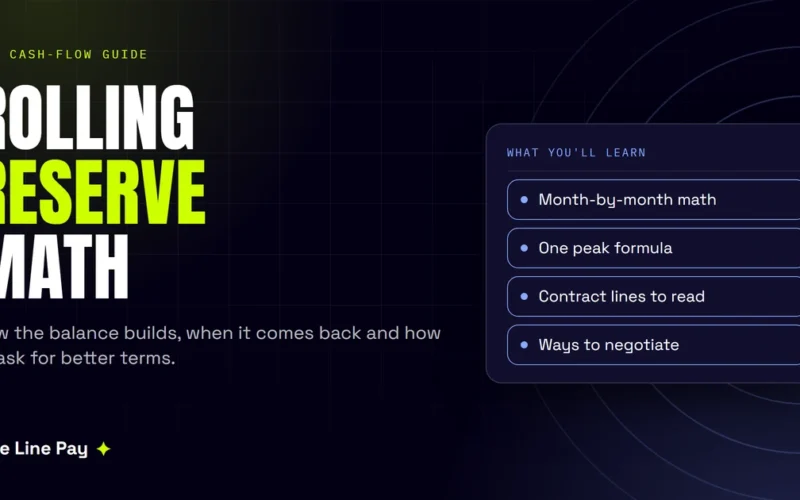
A rolling reserve holds back part of each sale for a set time, then releases it. Say you process $20,000 a month with a 10% reserve. That’s $2,000 a month you can’t spend yet, even though it’s still yours.
Reserve terms vary by provider and by business. Get the percentage, the hold period and the release schedule in writing.
Chargeback Limits
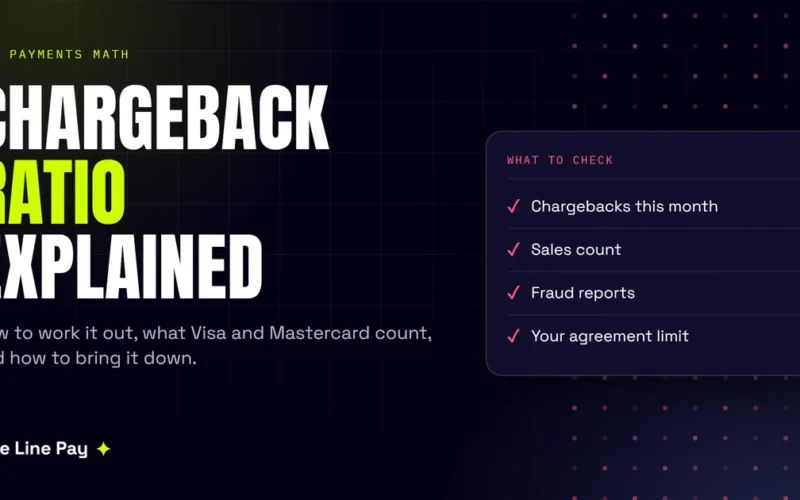
Card networks track disputes closely. Visa’s VAMP fact sheet lists a 1.5% Excessive merchant level for card-not-present sales in the US, Canada, the EU and Asia Pacific from April 1, 2026, with at least 1,500 fraud and dispute counts in a month. Mastercard’s Excessive Chargeback Program is widely reported to start at 1.5% and 100 chargebacks in a month, so ask your processor for the current numbers.
Your provider may act well before those lines. Visa also measures acquirers across their whole portfolio, at levels as low as 0.5%, so one merchant’s disputes matter to the bank. Early refunds, a clear billing name and fast replies to buyers all help.
Contract Terms
The OCC handbook notes that most agreements let acquirers raise rates and fees during the contract. It also says a contract may carry a termination fee if you leave early. Read both clauses before you sign, and ask what would trigger a change.
How to Prepare for a High-Risk Merchant Account Application
A clean file makes the review easier for everyone. Start with these items before you contact any provider.
- Gather your documents. Expect business registration papers, a government ID for each owner, recent bank statements and website details. Past processing statements help if you have them.
- Fix your website. Show clear refund, shipping and privacy policies, plus a working way to reach you. This peptide payment guide shows how that plays out in one strict category.
- List every product. Your application should match what’s on your site and what you actually ship.
- Know your numbers. Have your expected monthly volume, average order and any past dispute rates ready.
- Explain past problems. A declined application or closed account isn’t something to hide. Say what happened and what changed.
- Keep your promises. If you ship goods, the FTC’s mail order rule guide explains what you must do when orders run late.

With True Line Pay, that path has four stages: consultation, application, underwriting and activation. The application is short, free to submit and takes about five minutes, and a real specialist reviews your documents and gives updates. We pick the route through our gateway and processor network and handle the setup, so you don’t sign a separate gateway or processor contract.
Questions to Ask Any Provider
Approval is only the start. You want an account that still works in a year, so ask these before you sign.
- Which bank is the acquirer on my account? In the US, Visa’s rules say the merchant agreement must clearly state the acquirer’s name and location.
- Do you accept my exact products, in writing?
- What are all my fees, including dispute and refund fees?
- Will there be a reserve, and what are the percentage, hold time and release schedule?
- What chargeback level would make you act, and how would you warn me?
- What happens to my money if the account closes?
- How do I reach a person when something goes wrong?
- Can I leave, and what would it cost?
Warning Signs
A few things should make you slow down. Walk away from any of these, whatever the rate.
- A promise of guaranteed approval
- No questions about your products, website or disputes
- Advice to describe your business as something it isn’t
- Fees you only hear about by phone, never in writing
- Pressure to sign before you read the full agreement
Key Takeaways
- A high-risk merchant account is a card processing account for businesses that banks see as more likely to cause chargebacks, fraud or losses.
- The label comes from each bank’s own risk view, plus card network rules. It isn’t a judgment of your honesty.
- Expect a deeper review, usually higher fees and, in many cases, a reserve.
- Compare providers on effective rate and reserve terms, not just the headline rate.
- Visa lists a 1.5% Excessive merchant level for the US from April 2026, but your provider may act sooner.
- Full disclosure of your products and past problems gives you the best shot at an account that lasts.
Frequently Asked Questions
Is a high-risk merchant account a bad thing?
No. It means a bank looked at your business and agreed to take on a known risk. It costs more than a standard account, but it lets you take cards with your products fully disclosed.
What makes a business high-risk?
Processors look at your industry, chargeback history, billing model, ticket size and volume. Nutra, peptide, travel, MLM, firearms and telemedicine are common examples, though each bank draws its own lines.
Can a new business get a high-risk merchant account?
A new business can apply, but no one can promise approval. With little history to judge, a bank may ask for a reserve or other limits. Complete documents and a finished website help your case.
How long does approval take?
It depends on your industry and how fast you send documents. Many of our reviews finish within a few business days once a file is complete, and other providers will differ.
Will I have to accept a reserve?
Not every high-risk account has one. Some businesses do, especially when they’re new to processing. If one applies, it should be clearly stated in your merchant agreement.
Can I get an account after a decline or closure?
Possibly. A previous decline or closure doesn’t automatically disqualify you, but it does need a clear explanation. Tell the provider what happened and what has changed.
Which cards can I take?
We take Visa, Mastercard, American Express and Discover, plus ACH bank payments. Ask any provider which cards and sales channels your approval covers, since it can vary.
Is a high-risk account the same as an offshore account?
No. High-risk describes your risk level, while offshore describes where the bank is. Ask where your acquirer is based and how that affects currency, payout timing and your legal options.
Can I move out of the high-risk group later?
Sometimes. A clean record with low chargebacks may earn better terms at a review. If your industry is the main reason for the label, though, it may stay.
Conclusion: Treat the Label as a Starting Point
A high-risk merchant account isn’t a penalty. It’s a deal: a bank takes on a known risk, and you accept closer review and tighter terms in return. You’ll get the most from it if you disclose everything, watch your disputes and read your contract.
True Line Pay works with businesses across 26+ high-risk industries. If you’re not sure where you stand, talk to a specialist before you apply, and bring your questions.
This article is general information, not legal advice. Card network rules and laws change, and they vary by state and country, so check current terms and speak with an attorney or licensed advisor where it matters.
Ready when you are
Find Out Where Your Business Stands
Tell True Line Pay what you sell and how you bill. A payments specialist will explain what underwriting needs and review your file. Approval isn’t guaranteed, and final pricing depends on that review.

Payments specialists helping high-risk merchants get approved and stay processing.
3 comments